
Investors make bets on people
Founders tend to focus most of their energy on making sure they have the business fundamentals right. Strong technology, a credible market, and early traction are all critical, and it can be easy to assume that once those pieces are in place, the fundraising will take care of itself. But what actually matters the most when raising a round?
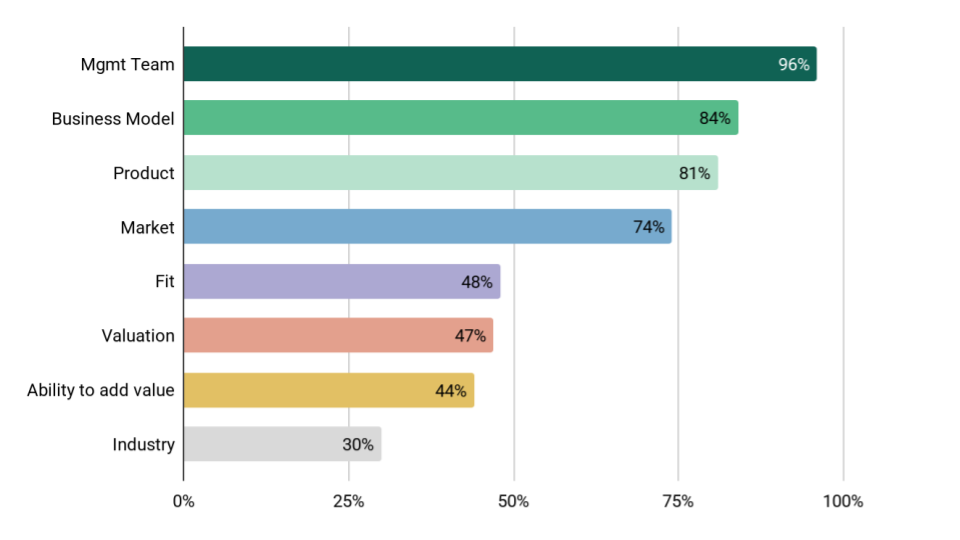
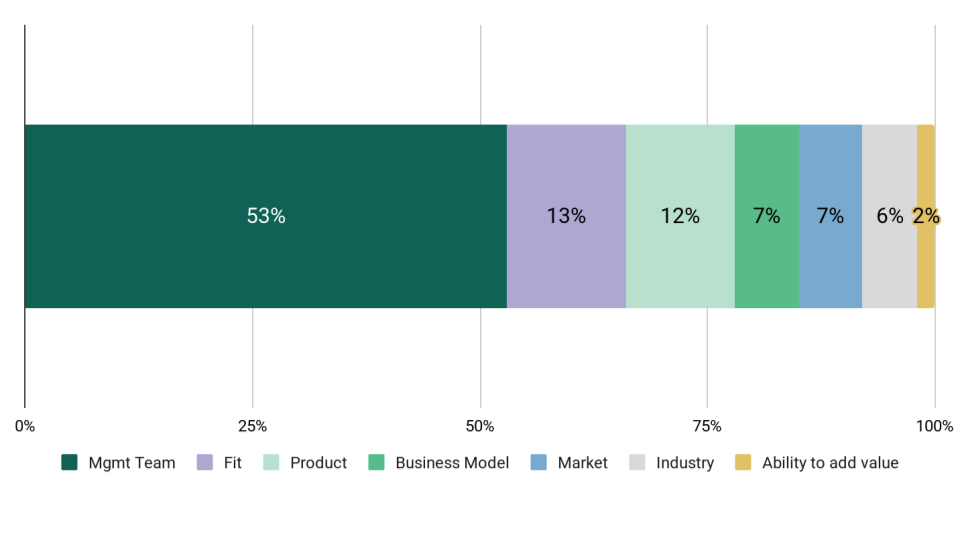
Data on venture decision-making shows that management team quality is the most important factor in early-stage investment decisions, even ranking ahead of the business fundamentals. With market conditions and technology constantly in flux, investors want conviction that leadership teams can navigate the inevitable challenges ahead.
According to the largest study of VC decision-making to date, the strength of the management team is the most important factor for deciding whether to invest in early stage companies:
% of early-stage VCs saying this factor is Important
% of early-stage VCs saying this factor is the Most Important
Source: NBER “How Do Venture Capitalists Make Decisions?” (1,110 respondents at 860 VC firms)
How you show up during fundraising matters
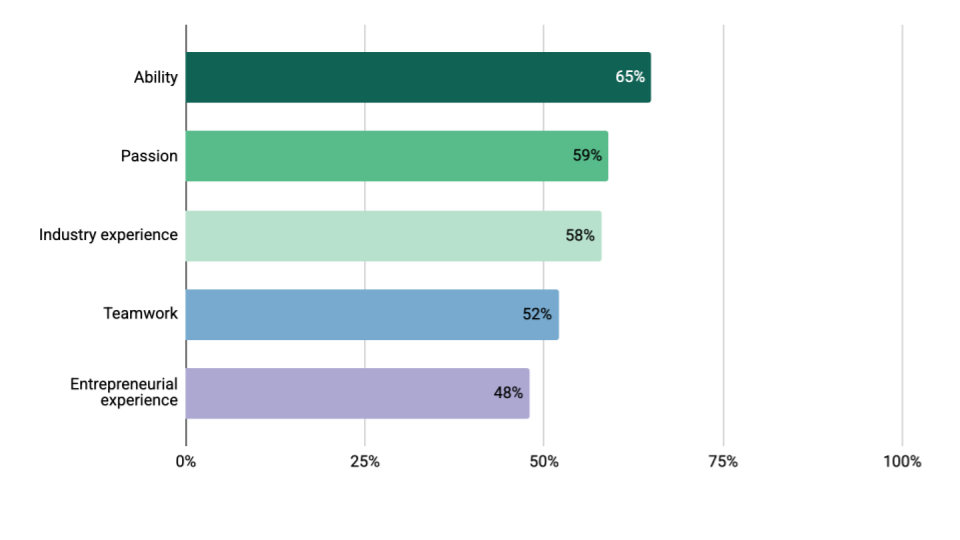
That same study found that how VCs evaluate quality is less about how you appear “on paper” and more about the impression they form of you throughout your interactions.
Venture investors see hundreds of companies each year but invest in only a handful. For the companies that advance, the fundraising process often stretches over multiple months and involves substantial diligence. From an investor’s perspective, the process itself is one of the clearest windows into how a team actually operates, based on how founders communicate, prioritize, and make decisions under pressure.
% of early-stage VCs saying this Mgmt Team Quality is among the Most Important
Treat fundraising with the same rigor as core execution
Fundraising is a live demonstration of how the company will be run, and every email, meeting, and follow-up contributes to investor perception. Take advantage of opportunities to build confidence throughout the process:
-
- Show you’ve done your homework
Have an understanding of: Key players, incentives, how forces are shifting, and how those changes create opportunity. Demonstrate depth of understanding by explaining complexity simply. - Be clear on why you’ll win
Know the concrete reasons your company is differentiated. Anchor on credible arguments that build to a logical conclusion, rather than lofty narratives. Clear, structured thinking here speaks to your decision-making credibility. - Engage thoughtfully with pushback
During Q&A, investors often care less about winning the argument than about how you engage skepticism. Calm, reasoned responses build confidence. - Maintain consistency over time
Narrative, priorities, and metrics should stay aligned across materials and conversations, unless there’s a clear rationale otherwise. Inconsistencies raise questions around internal clarity and business direction. - Communicate progress proactively
Share progress, setbacks, and course corrections throughout the process without waiting to be asked. This reflects ownership and operational maturity.
- Show you’ve done your homework
VCs view fundraising as one of the strongest indicators of how a team will operate post-investment. When treated thoughtfully, the process allows founders to build trust in their ability to execute, which can make or break the success of the raise. Professionalism earns credibility: Prepare, arrive on time, and deliver on commitments. In competitive rounds, the strongest teams spend time and effort differentiating themselves (and not just their businesses).
Further readings
How Do Venture Capitalists Make Decisions?
Ilya A. Strebulaev, Will Gornall, NBER Working Paper
https://www.nber.org/papers/w22587
Do Funders Care More About Your Team, Your Idea, or Your Passion?
Stanford Graduate School of Business
https://www.gsb.stanford.edu/insights/do-funders-care-more-about-your-team-your-idea-or-your-passion